


Prolonged sitting leads to musculoskeletal disorders (MSDs) and significantly increases the risk of cardiovascular diseases, type 2 diabetes, obesity, and cancer. Aporia® revolutionizes seated posture by reintroducing movement, allowing users to move naturally throughout the day and effectively preventing the harmful effects of sedentary behavior.
Gil Ayache – Blue Portance – April 21, 2024
Overview: Prolonged sitting, defined as remaining immobile for more than two consecutive hours, has become a major public health concern. With the rise of remote work and increased screen use, a growing number of people are affected, leading to musculoskeletal disorders (MSDs) and low back pain—the leading causes of compensation for occupational diseases in France.
In the long term, excessive sedentary behavior significantly increases the risk of cardiovascular diseases, type 2 diabetes, obesity, cancer, and premature death—key priorities of national prevention policies.
Traditional recommendations issued by national health organizations promote regular breaks and frequent movement. However, these approaches fail to address the core issue: the inherent immobility of the seated position.
It is within this context that the Aporia® ergonomic seating solution stands apart, delivering a true postural revolution. By reintroducing natural movement while sitting, Aporia® enables users to move effortlessly throughout the day, offering an unprecedented way to prevent the harmful effects of prolonged sitting.
The Dangers of Prolonged Sitting
What Is Prolonged Sitting?
- Une faible consommation d’énergie ;
- Une posture statique ;
- Un effort constant des muscles pour maintenir la position1.
Prolonged sitting is defined as remaining immobile for more than two consecutive hours. It is characterized by:
- Low energy expenditure
- A static posture
- Continuous muscular effort to maintain the position2
With the evolution of work practices—particularly intensive computer use—the proportion of individuals spending most of their day seated doubled between 2000 and 2015 in the European Union². In France, nearly 40% of employees work primarily in a seated position, exposing a large segment of the workforce to significant health risks.
Early Consequences: Musculoskeletal Disorders (MSDs) and Low Back Pain
The harmful effects of prolonged sitting quickly manifest as musculoskeletal disorders (MSDs). These result from an imbalance between the body’s physical capacities and the demands and constraints placed upon it3.
These conditions affect muscles, tendons, and nerves and are exacerbated by prolonged static postures. MSDs include:
- Low back pain
- Neck pain
- Carpal tunnel syndrome
They affect both upper limbs (shoulders, wrists), lower limbs (knees), and the spine (neck and back).
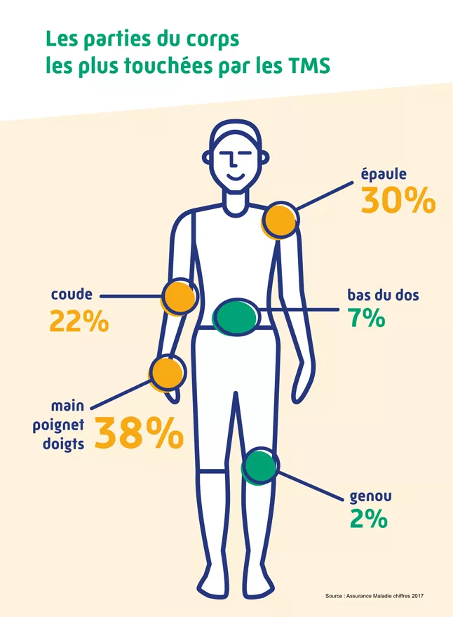
In France, Italy, and Spain, MSDs are the leading cause of compensation for occupational diseases4. Over time, these conditions often become chronic, significantlyimpairing work performance and quality of life.
Long-Term Health Impacts
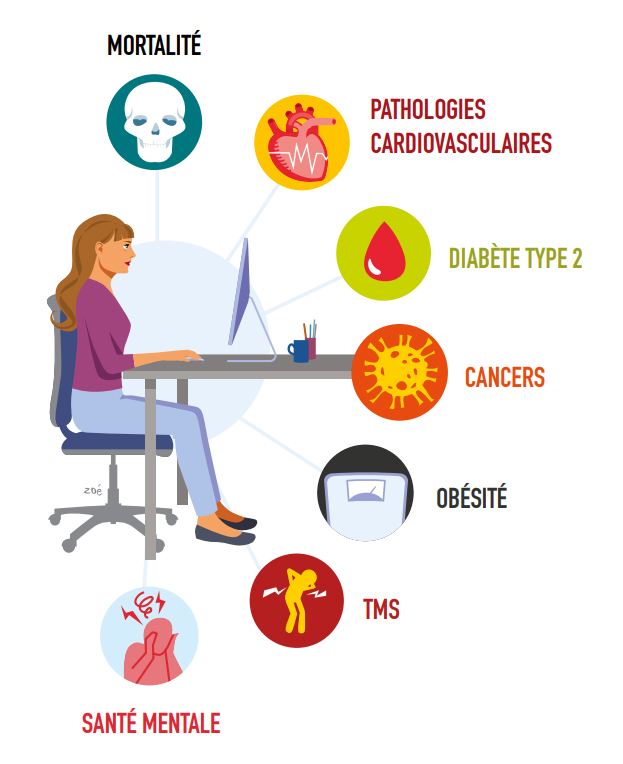
The long-term consequences of prolonged sitting are even more concerning5. Numerous studies have shown that extended sedentary behavior is associated with increased risks of:
- Cardiovascular diseases (17% increase in mortality risk)6
- Type 2 diabetes (112% increase in risk due to insulin resistance)7
- Obesity (visceral fat accumulation caused by inactivity)8
- Cancers (including breast, colon, and pancreatic cancers linked to sedentary behavior)
- Mental health issues (stress, anxiety, cognitive difficulties)
The overall impact is a 49% increase in the risk of premature mortality9
Conventional Recommendations to Counter Sedentary Behavior
Integrating Regular Breaks and Movement
To mitigate the effects of prolonged sitting, health professionals recommend11:
- Standing up every 30 minutes to walk for a few minutes
- Alternating between sitting and standing throughout the day
- Taking 10-minute breaks every hour
These recommendations aim to integrate regular movement into daily routines. This approach is illustrated in the context of low back pain by the French Health Insurance campaign slogan:
“Back pain? The right treatment is movement.”12
However, these recommendations remain inherently limited. They fail to reconcile continuous body mobility with the seated position itself.
Workplace Ergonomics
Poor workplace ergonomics significantly exacerbate MSDs. For example, prolonged poor sitting posture leads to low back pain, cervical tension, and visual disorders related to eye strain. Reorganizing the workspace is therefore essential to reduce these issues13.
Designing a well-adapted workstation—adjusted to the individual’s body and needs—is crucial to improving comfort and reducing the risk of MSDs.
Aporia®: A Revolutionary Solution for Posture and Ergonomics
Traditional analyses of sitting posture are based on a paradigm that opposes sitting and mobility. Rather than accepting this limitation, we sought to understand the root of the problem by starting from the standing position, which allows continuous mobility.
Everyday Experience of Dynamic Postural Balance
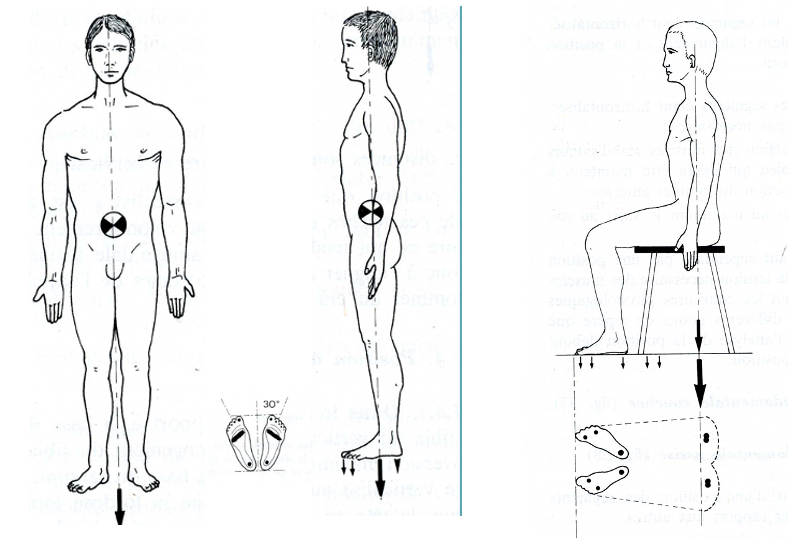
In the standing position, we naturally experience dynamic balance. Instinctively, we sway within a limited space, forming an inverted cone, without energy expenditure or muscular tension. This space is known as the “functional economy cone” or “cone of stability.”14
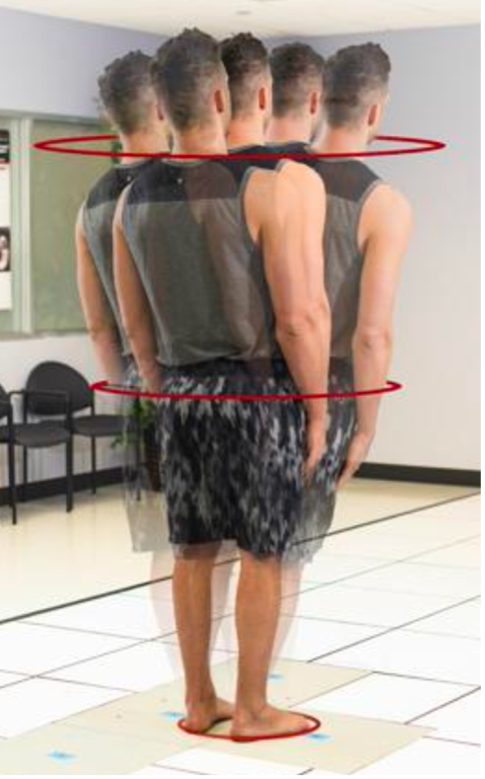
When we exceed the boundaries of this cone of stability, balance is lost and muscular tension appears to restore it. The size of the cone depends on the base of support, defined by the distance between the feet. This dynamic balance is ensured by coordinated movements of the hips and ankles.
Sitting Blocks Mobility
In the seated position, mobility is blocked because the hip and ankle joints are constrained. This immobility imposes a single equilibrium posture—the lotus position. Any deviation from this posture generates postural disturbances that the body cannot rebalance, leading to repeated musculoskeletal tensions that ultimately result in chronic postural disorders.
Breaking Free from the Immobility Paradigm While Sitting
The solution is straightforward: mobility must be restored to the hips and ankles while sitting.
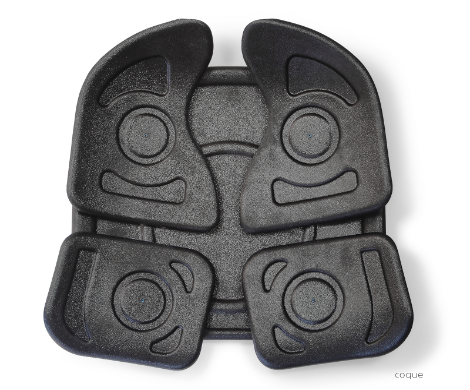
To achieve this, we designed a patented multi-articulated structure that forms the framework of Aporia® seating solutions and enables:
- Restoration of dynamic body movement through a curved base
- Support for micro-balancing movements via four articulated pads that maintain balance in real time
- Restoration of hip and ankle mobility, allowing the body to regain natural control of dynamic balance
This is made possible by independent support of each body segment involved in joint movement.
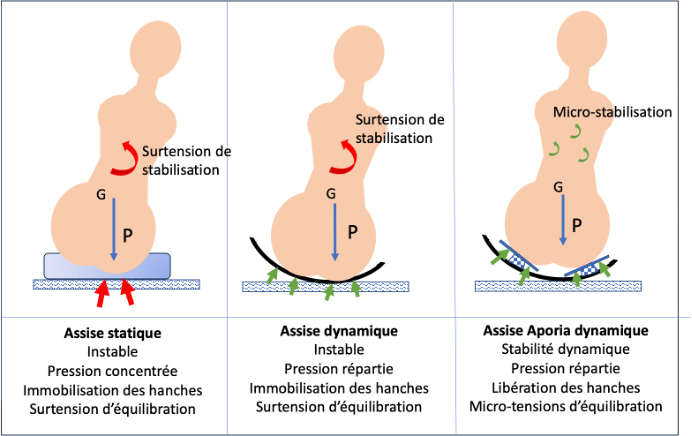
The Postural Revolution with Aporia®
En redonnant aux hanches et aux chevilles leur mobilité naturelle, Aporia® crée la stabilité dans le mouvement en inscrivant chaque mouvement en position assise dans un cône de stabilité.
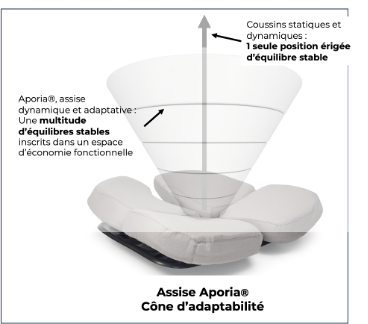
All seated positions become good postures, free from excessive joint and muscular strain.
Moreover, this mechanism enables natural body oscillation with greater movement amplitudes than in standing posture, thanks to a wider base of support.
Conclusion : Une solution ergonomique globale avec Aporia®
Aporia® represents far more than a simple ergonomic improvement. It offers a comprehensive solution to prevent MSDs, low back pain, and the harmful effects of prolonged sitting. By reintroducing movement into the seated posture, Aporia® allows users to move naturally throughout the day—without conscious effort.
Call to Action
Discover how Aporia® can transform your daily life and improve well-being at work. Prevent MSDs and sedentary-related health risks with this revolutionary ergonomic solution.
Contact us to learn more or to try Aporia® today
📧 contact@blueportance.us
📞 +33 6 15 77 81 36
- « Position prolongée d’assise statique au travail – Effets sur la santé et conseils de bonnes pratiques – Synthèse » – Agence européenne pour la sécurité et la santé au travail (EU-OSHA) – 2021 https://osha.europa.eu/sites/default/files/sitting_at_work_721a_fr_rev.pdf ↩︎
- Dito ↩︎
- Comprendre les troubles musculo-squelettiques – avril 2024 – Ameli.fr
https://www.ameli.fr/alpes-maritimes/assure/sante/themes/tms/comprendre-troubles-musculosquelettiques#:~:text=Les%20troubles%20musculo–squelettiques(TMS)%20regroupent%20des%20affections%20touchant,les%20membres%20inférieurs%20(genoux). ↩︎ - Vue d’ensemble des faits et chiffres sur les TMS : prévalence, coûts et caractéristiques démographiques dans l’UE. l’Agence européenne pour la sécurité et la santé au travail (EU-Osha) – 2019. https://osha.europa.eu/sites/default/files/Work_related_MSDs_prevalence_costs_and_demographics_in_EU_summary_FR.pdf ↩︎
- « Les postures sédentaires au travail. Définition, effets sur la santé et mesures de prévention » – INRS – 2024
https://www.inrs.fr/media.html?refINRS=ED%206494 ↩︎ - « Les Risques de la Sédentarité et de l’Inactivité Physique sur la Santé” – juillet 2024 – CNRS https://sport.cnrs.fr/les-risques-de-la-sedentarite-et-de-linactivite-physique-sur-la-sante/ ↩︎
- Dito ↩︎
- Dito ↩︎
- Pourquoi rester Assis au Bureau est Mauvais pour Vous et pour le Business ?https://youmatter.world/fr/categorie-economie-business/rester-assis-bureau-consequences-sante-business/ ↩︎
- « Les postures sédentaires au travail » – dito
https://www.inrs.fr/media.html?refINRS=ED%206494 ↩︎ - « Position prolongée d’assise statique au travail – Effets sur la santé et conseils de bonnes pratiques – Synthèse » – Agence européenne pour la sécurité et la santé au travail (EU-OSHA) – 2021
https://osha.europa.eu/sites/default/files/sitting_at_work_721a_fr_rev.pdf ↩︎ - « Mal de dos : le bon traitement, c’est le mouvement ! » – L’assurance Maladie – amelie.fr – 31 octobre 2023
https://www.ameli.fr/alpes-maritimes/assure/sante/themes/lombalgie-aigue/traitement-prevention ↩︎ - Un guide des bonnes pratiques d’aménagement de l’espace de travail a été publié par les services de santé belges : https://www.preventiondestms.be/fr/prevenir-les-tms/position-assise-prolongee ↩︎
- “The standing man : scoliosis and horizontal plane deformity. The best way to understand 3D in orthopedics” – Jean Dubousset – e-mémoires de l’Académie Nationale de Chirurgie, 2012, 11 (3) : 066-070
https://e-memoire.academie-chirurgie.fr/ememoires/005_2012_11_3_066x070.pdf ↩︎ - « A method to quantify the “cone of economy” “ – Ram Haddas · Isador H. Lieberman European Spine Journal (2018) 27:1178–1187
https://doi.org/10.1007/s00586-017-5321-2 ↩︎